
Aramid Sleeving for Defence and Aerospace: The Documentation That Gets It Past Goods-In
In defence and aerospace, a sleeve with perfect properties and poor paperwork won't get past goods-in. This guide explains each document, what to check on it, and how to inspect aramid sleeving on arrival.
In commercial industry, a sleeve is approved when it fits and survives. In defence and aerospace, that is only half the job. The other half is paper: proof of what the material is, where it came from, that this batch matches the one that was tested, and that nothing has changed since. A sleeve with perfect properties and poor documentation will not get past goods-in at a defence production line.
This article is for buyers, quality engineers and design engineers in defence and aerospace programmes who are sourcing aramid braided sleeving, and for harness makers who supply them. It explains what each document is for, what to check on it, and how to build an incoming inspection that catches problems before they reach a harness.
Who asks for what in Indian defence programmes
The documentation a programme needs depends on who has to sign off the finished equipment. In India, three organisations shape most requirements:
- DGQA (Directorate General of Quality Assurance) oversees quality assurance of land and naval defence stores.
- DGAQA (Directorate General of Aeronautical Quality Assurance) does the same for military aviation stores.
- CEMILAC (Centre for Military Airworthiness and Certification) certifies the airworthiness of military aircraft and airborne equipment.
A sleeving supplier rarely deals with these bodies directly. Requirements reach it through the prime contractor, the system house or the harness maker, written into a purchase order or a quality clause. But knowing where they come from explains why they are strict, and why a missing batch number can hold up a delivery.
The documentation chain
The aim of all the paperwork is one capability: if a harness fails in service, the investigation can trace the sleeve on it back to a braiding batch and a yarn lot, and find every other harness built from the same material. Each document below is a link in that chain.
The documents, one by one
| Document | What it proves | When it's asked for |
|---|---|---|
| Certificate of Conformity (CoC) | This batch meets the agreed specification | Every delivery |
| Yarn producer's certificate | The fibre is what the specification says, by producer, grade and lot | Every delivery, or on request |
| Technical data sheet | Typical properties and construction | At selection |
| Test reports | Performance against named test methods | At qualification |
| First article inspection report | The first production batch matches the approved sample | Before first production use |
| Material declarations (RoHS, REACH) | Restricted substances status | At approval; on changes |
| Change notification | Customer is told before anything changes | Whenever a change is planned |
1. The Certificate of Conformity
The CoC is the document that travels with every delivery. A useful one includes:
- The supplier's part number and the customer's part number, if they differ.
- Size and quantity, matching the spool labels.
- Batch number(s) for the material delivered.
- The specification or drawing the material conforms to, with revision.
- The yarn producer, grade and lot, or a reference to the yarn certificate.
- Date and a named, signed authorisation.
A CoC that says only "We certify the goods conform to your order" gives a quality engineer nothing to trace. Ask for batch-level detail at the time of the order, not after the delivery arrives.
2. The yarn certificate: "Kevlar®" or "para-aramid"?
This is the point that catches most programmes out. Kevlar® is DuPont's trademark for its para-aramid fibre. Other producers make para-aramid too, under their own names. Their fibres are similar in chemistry and can be very close in properties, but they are not Kevlar®.
- If your drawing or specification says "Kevlar®", it requires DuPont fibre, and the yarn certificate should show it.
- If it says "para-aramid" with property requirements, other qualified fibres may be acceptable. That gives a wider supply base, but only if the specification is written that way.
- Either way, the yarn producer and grade should be stated on the documentation, so the material in the harness is known.
For the record: Synflex SYN-KEV sleeving is braided with DuPont Kevlar® or with another producer's para-aramid, depending on the order, and our documentation names the producer and grade. If your drawing calls for Kevlar® by name, tell us at the enquiry stage so the order is made with DuPont yarn and documented that way.
Also check that it is para-aramid. Meta-aramid (such as Nomex®) is a different fibre with excellent heat and flame behaviour but far lower strength and cut resistance. The two can look similar as yarn, and a substitution would not be obvious at a glance.
3. Test reports: name the method
A report is only as useful as the test method it names. "Flame retardant" or "high abrasion resistance" in a brochure is not evidence. A test report should state the method, the conditions, the sample and the result. Typical subjects for aramid sleeving in defence and aerospace are:
- Flammability. For civil aircraft cabins, the vertical burn tests of FAR/CS 25.853 are a common reference. Defence programmes may cite their own specifications.
- Smoke and toxicity. Naval and enclosed-vehicle programmes may require a toxicity index, for example to Def Stan 02-713 (formerly NES 713).
- Fluid resistance. Exposure to fuels, hydraulic fluids, lubricants and cleaning agents relevant to the platform.
- Environmental conditioning. Indian defence equipment is commonly tested to JSS 55555 for environmental conditions. The sleeve is usually tested as part of the harness or equipment, not alone.
Ask which tests the programme requires before asking a supplier for "all test reports". It saves time on both sides, and makes clear whether a new test is needed.
4. First article inspection
In aerospace, a first article inspection (FAI) verifies that the first production batch matches the approved design and sample, and AS9102 sets out the usual format. Even where a full AS9102 report isn't required, the principle is sound: the first production delivery is checked against the sample that was qualified, and the results are recorded.
5. Change notification
The most important promise in a defence supply relationship is often this one: nothing changes without telling the customer first. For a braided sleeve, a change could be a different yarn producer or grade, a different braiding construction (number of carriers, yarns per carrier, braid angle), a new production site or a different finish. Any of these could alter properties that were qualified. Write the notification requirement into the purchase order.
Building an incoming inspection for aramid sleeving
Documentation tells you what the supplier says. Incoming inspection checks it. For aramid braid, a simple plan catches most problems:
- Paperwork match. Do the part number, size, batch and quantity on the spool labels match the CoC and the purchase order?
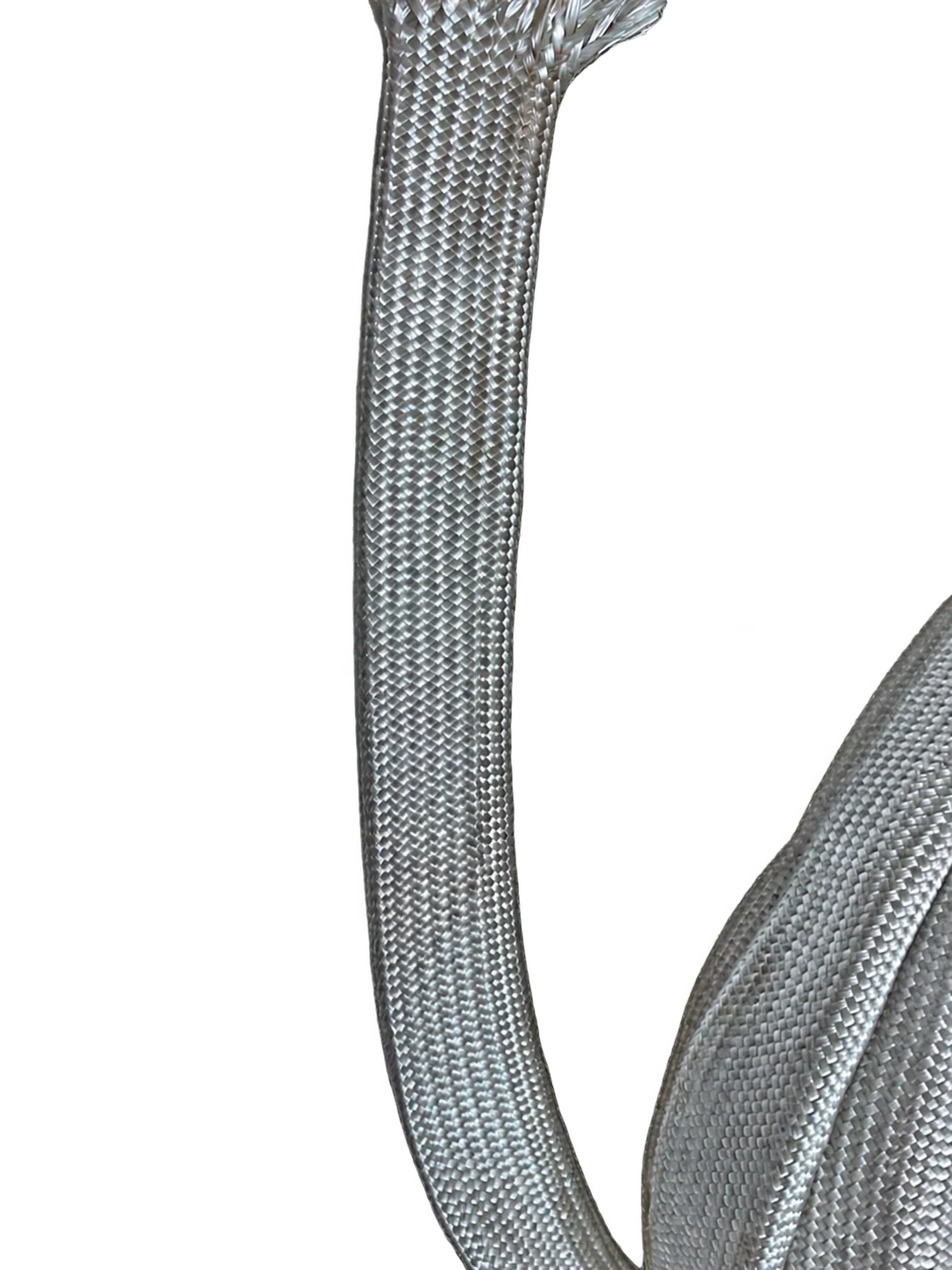
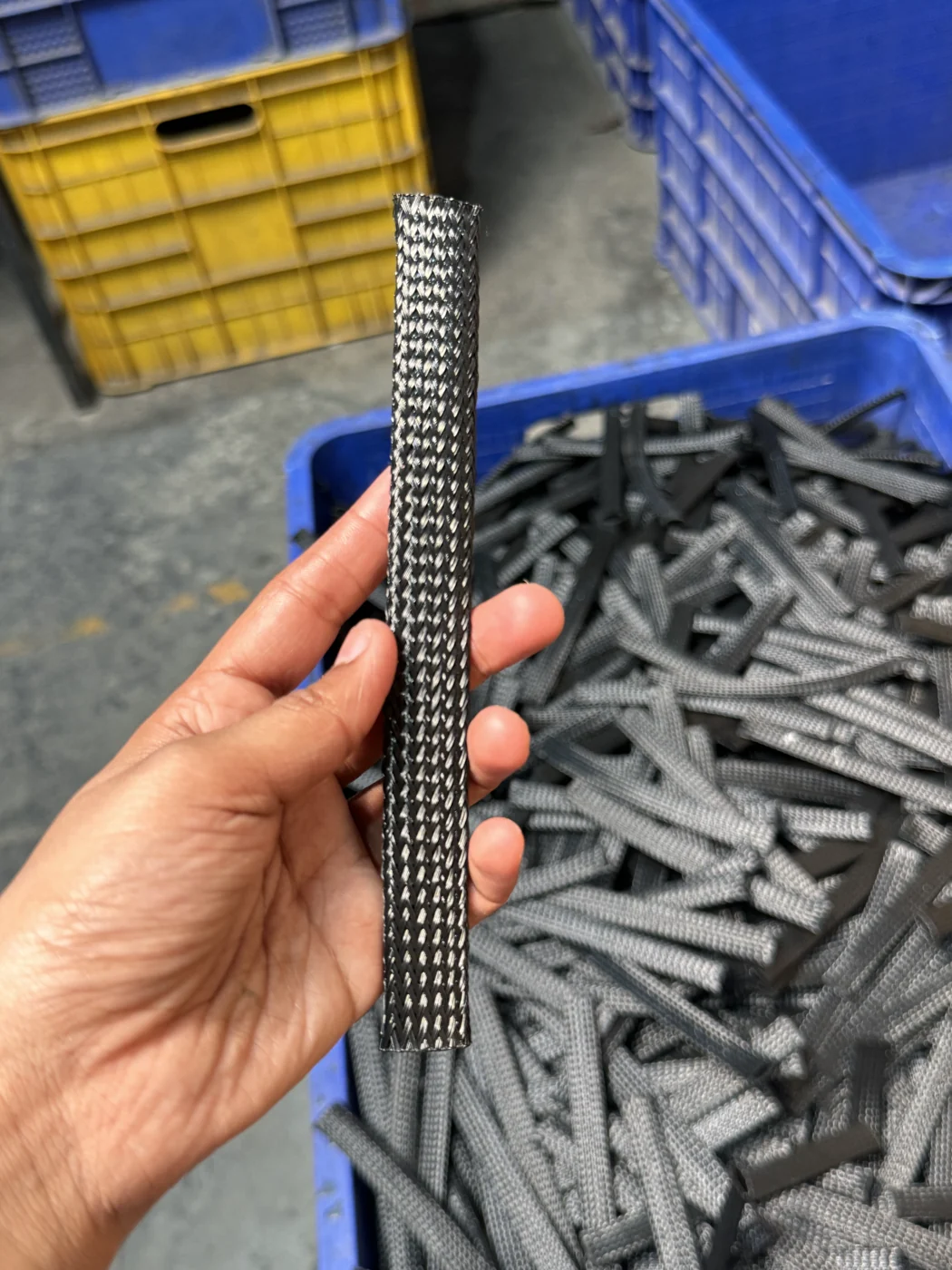
- Visual check. Even colour and braid pattern, no broken carriers, no contamination. Natural para-aramid is pale yellow; strong browning suggests light exposure in storage.
- Weight per metre. Cut and weigh a measured length. Weight per metre is quick to check and sensitive to construction changes and yarn substitution. Agree a nominal value and tolerance with the supplier at approval.
- Expansion range. Check that the sleeve fits over a mandrel at the minimum and maximum of its stated range. Synflex aramid sleeving uses 14 standard ranges, from 1–6 mm (SYN-KEV-003) to 64–120 mm (SYN-KEV-076).
- Record the batch. Log it against the harnesses it goes into. That last link in the chain is the customer's.
If something seems wrong and the paperwork can't settle it, a laboratory can identify the fibre type by infrared spectroscopy (FTIR). It is not a routine test, but it is a definitive way to resolve a para-aramid versus meta-aramid or blend question.
Storage and shelf life
Aramid has no chemical shelf life in the sense that adhesives or sealants do, but storage conditions matter for both performance and records. Store spools in their cartons, out of daylight (aramid degrades in UV, as explained in our article on aramid's honest weaknesses), in a dry area, and first in, first out. Keep the labels on the spools until the last metre is used, so partial spools stay traceable.
A purchase order checklist
Most documentation problems are avoided by asking for the right things at the time of the order:
- Fibre: "Kevlar®" or "para-aramid", with producer and grade stated on documentation.
- Construction and size, with the drawing or specification and revision.
- CoC with batch-level detail, delivered with every consignment.
- Yarn certificate supplied or referenced.
- Required test reports, by test method.
- First article inspection for the first production batch.
- Advance notification of any change in yarn, construction, process or site.
- Spool labelling: part number, size, batch, length, date.
Frequently asked questions
What documents should come with aramid sleeving for defence use?
At minimum a Certificate of Conformity with batch numbers, a reference to the yarn producer's certificate, and spool labels matching the CoC. Programmes may also require test reports to named methods, a first article inspection report and material declarations.
Is all aramid sleeving Kevlar?
No. Kevlar® is DuPont's trademark for its para-aramid fibre. Other producers make para-aramid fibres under their own names. If a drawing specifies Kevlar®, the yarn must be DuPont fibre; if it specifies para-aramid, other qualified fibres may be accepted.
How can I check aramid sleeving at goods-in?
Match labels to the CoC and purchase order, inspect visually, check weight per metre against the agreed value, and check fit over mandrels at the ends of the expansion range. Fibre type can be confirmed by FTIR in a laboratory if needed.
Why does a change notification matter for sleeving?
A change of yarn, braid construction or production site can alter properties that were qualified. Advance notification lets the customer decide whether requalification is needed before the changed material reaches production.
The bottom line
In defence and aerospace, the sleeve you can't trace is a sleeve you can't use. Ask for batch-level CoCs, know whether your specification says Kevlar® or para-aramid, name the test methods you need, check weight and expansion at goods-in, and insist on notification before anything changes. None of it is complicated, and all of it is easier to agree at the order than after a delivery has been held at goods-in.
References
- SAE AS9100, Quality Management Systems: Requirements for Aviation, Space and Defense Organizations; SAE AS9102, First Article Inspection Requirement.
- 14 CFR / CS 25.853, Compartment interiors (flammability), and 25.1713 (EWIS fire protection).
- Def Stan 02-713, Determination of the Toxicity Index of the Products of Combustion from Small Specimens of Materials.
- JSS 55555, Environmental Test Methods for Electronic and Electrical Equipment.
Kevlar® and Nomex® are registered trademarks of DuPont de Nemours, Inc. or its affiliates. This article describes general industry practice and does not state the requirements of any specific programme.
Where this shows up in the catalogue

Have a specification question?
Send your application details and we'll help match the right product and configuration.
Need a documentation pack for a defence or aerospace programme?
Tell us the documents and test methods your programme requires through our technical enquiry form, and we will confirm what we can supply. See aramid expandable sleeving sizes.