
Aramid Sleeving's Honest Weaknesses: UV, Moisture, Chemicals and How to Design Around Them
Aramid sleeving is strong, light and doesn't melt. It also has a few real weaknesses. Know them and they are easy to design around; ignore them and they show up as failures in service.
Most articles about aramid sleeving are a list of strengths: stronger than steel by weight, doesn't melt, resists cut and abrasion. All true, and we have written about why in why aramid doesn't melt. This article is about the other side. Para-aramid has a small number of real weaknesses. If you know them, they are easy to design around. If you don't, they show up as a harness that looks fine at inspection and fails in service.
This guide is for engineers specifying aramid sleeving for defence vehicles, aircraft, shelters, radar and outdoor equipment, and for quality teams who have to approve it. For each weakness we explain the mechanism, whether it matters for a sleeve, and what to do about it.
The weaknesses at a glance
| Weakness | What happens | Does it matter for a sleeve? | What to do |
|---|---|---|---|
| Sunlight (UV) | Yellow turns brown; strength falls | Yes, outdoors or behind glass | Cover it, or use glass or PET for exposed runs |
| Moisture | Absorbs several % of its weight in water | Rarely for strength; sometimes for potting, overmoulding and electrical tests | Store sealed; dry before potting or overmoulding |
| Bleach, strong acids and alkalis | Chemical attack on the polymer | Yes, where equipment is washed down | Choose another material for wash-down zones |
| Compression and tight folds | Fibres buckle internally (kink bands) | Occasionally, at sharp folds and clamps | Avoid creasing; use cushioned clamps |
| Long-term heat | Slow loss of strength above about 150–180 °C | Yes, near engines and exhausts | Use fibreglass in hot zones |
| Hard to cut, no heat-sealed ends | Blunts ordinary tools; ends fray | For installers, yes | Aramid shears; tape or shrink-sleeve the ends |
1. Sunlight: the weakness that matters most
The mechanism
Para-aramid absorbs light in the near-UV and violet range, roughly 300–450 nm. That absorbed energy breaks bonds in the polymer chain near the surface, a process called photodegradation. The visible sign is colour: natural aramid is pale yellow and darkens towards gold, then brown, with exposure. The hidden effect is loss of strength.
DuPont's xenon-arc data show how fast it can be. A 1,500-denier Kevlar® yarn kept only about one third of its strength after 450 hours of exposure. That is not a long time. A sleeve fixed to the outside of a vehicle in much of India, where the summer UV index regularly reaches 10 or more, will accumulate hundreds of hours of strong sun in a single season.
Why UV attacks the surface first
Because aramid absorbs UV so strongly, the light does not penetrate far. The outer filaments of each yarn take most of the damage and partly shade the ones inside. That has two practical consequences:
- Thin constructions suffer more. DuPont quotes UV data by yarn size for this reason: a fine yarn has a higher proportion of surface filaments. A sleeve braided from fine aramid yarn will lose strength faster than one braided from heavy yarn. Synflex SYN-KEV uses 1,670 dtex yarn, close to the 1,500-denier yarn in DuPont's test. Synflex braids with DuPont Kevlar® or another producer's para-aramid, depending on the order; the producer and grade are stated on each quotation. Other para-aramids share the same sensitivity to UV.
- Colour is a useful field indicator. Slight darkening under indoor light is normal and harmless. Strong browning on an outdoor run means the outer filaments have been damaged. Treat it as a reason to inspect or replace, not as cosmetic.
What to do
- Cover it. Run aramid inside a UV-blocking overbraid, conduit or jacket on any exposed section. A black PET sleeve over the aramid, such as SYN-PET-EX, blocks the light while the aramid underneath does the cut and abrasion job.
- Or change material on that section. Glass is unaffected by UV. If the exposed run doesn't need aramid's cut resistance, use fibreglass sleeving there and switch to aramid where the harness goes inside. Synflex aramid and fibreglass sleeving share the same 14 size codes, so the change of material doesn't change the size reference.
- Remember windows and canopies. Clear canopies, vision blocks and windows filter some UV but not all of it. Aramid behind glass in direct sun still degrades, more slowly.
- Store spools in the dark. Keep spools in their cartons and away from windows in the stores and on the shop floor.
2. Moisture: real, but often overstated
Aramid is a polar polymer and absorbs water from the air. DuPont's technical guide gives Kevlar® 29 yarn about 4.5 % moisture at equilibrium from a bone-dry state and up to about 7 % as shipped. Glass fibre, by comparison, absorbs essentially nothing into the fibre itself.
For a protective sleeve, this rarely matters. Aramid's strength changes little with normal humidity, and DuPont reports no strength loss after a year in sea water. Where it can matter:
- Potting, overmoulding and adhesives. Moisture in the sleeve can turn to steam or react with a resin during cure, causing bubbles, voids or poor adhesion at the end of a sleeved harness. Dry sleeved assemblies before potting or overmoulding, as you would any hygroscopic material. Follow your resin supplier's drying advice.
- Electrical tests. A damp braid lying against terminals can lower surface insulation resistance readings. Aramid sleeving is a protective layer, not insulation, but a damp one can still affect a test result.
- Weight and dimensions. A few % of moisture changes the sleeve's mass slightly. This matters only where harness weight is controlled to fine limits.
What to do: keep spools sealed until use, store in a dry area, and add a drying step before any potting or overmoulding operation.
3. Bleach and strong chemicals
Aramid handles fuels, oils, hydraulic fluids and most solvents well. It does not handle strong acids, strong alkalis or sodium hypochlorite (bleach). In DuPont's chemical tables, even a 0.1 % hypochlorite solution severely degraded the yarn over 1,000 hours.
That is relevant for field hospitals, food and water equipment, shipboard galleys and any system routinely decontaminated or washed down with chlorine-based cleaners. In those zones, specify another material or keep the aramid fully enclosed.
4. Compression and tight folds
Para-aramid is extraordinarily strong in tension but comparatively weak in compression. When a fibre is folded sharply or crushed, the molecules on the inside of the bend buckle into kink bands: small internal creases that reduce strength at that point. Repeated folding also causes fibrillation, where the fibre splits into finer fibrils.
For a sleeve, this shows up in three places:
- Hard creases, for example where a sleeved harness is folded flat for packing or a panel closes on it.
- Bare metal P-clamps that bite into the sleeve. Use cushioned clamps.
- Sleeves that are too tight. A sleeve stretched to the top of its range has less give at a bend. Size it so the bundle sits in the lower half of the range, as described in our sizing guide.
Normal curves along a harness route are not a problem. It is the sharp, repeated fold that does the damage.
5. Long-term heat
Aramid does not melt, but it does age. DuPont recommends long-term use at roughly 150–180 °C. Above that, strength falls with time, even though the fibre does not decompose until well above 400 °C. This is why aramid is excellent for a brief fire or a hot spot, and the wrong choice for continuous operation next to an engine or exhaust. We compare the three materials zone by zone in aramid vs fibreglass vs PET.
6. The installer's complaints: cutting and fraying
The same toughness that makes aramid resist cuts also makes it hard to cut. It blunts ordinary scissors quickly and tends to crush rather than cut with dull blades. And because aramid does not melt, it cannot be hot-knife sealed like PET.
- Use shears made for aramid (serrated or micro-serrated blades) and keep them for aramid only.
- Finish ends with high-temperature tape, a heat-shrink cuff, or a lacing tie. In hot zones, choose an end finish rated for the temperature.
- Cut fresh before installing. A frayed end is harder to thread over a bundle.
An honest checklist before you specify aramid
- Will any section see daylight? If yes, cover it or change material on that section.
- Will continuous temperature exceed about 150 °C? If yes, use fibreglass there.
- Will it be washed with bleach or exposed to strong acids or alkalis? If yes, choose another material or enclose it.
- Will it be potted or overmoulded? If yes, add a drying step.
- Is there a fold, crush point or bare clamp on the route? If yes, redesign the route or cushion the clamp.
- Does the threat actually need aramid? If the job is mainly heat, use glass. If it is general bundling, PET may be enough. Aramid earns its cost where cut and abrasion resistance at low weight matter.
Frequently asked questions
Is aramid sleeving UV resistant?
No. Para-aramid degrades in sunlight. In DuPont's xenon-arc tests, a 1,500-denier yarn kept only about one third of its strength after 450 hours. Outdoor or sunlit runs need a UV-blocking cover such as a PET overbraid or conduit, or a different material such as fibreglass.
Why has my aramid sleeve turned brown?
Aramid darkens with light exposure. Slight darkening indoors is normal and not a sign of damage. Strong browning on an outdoor run indicates UV degradation of the outer filaments and is a reason to inspect or replace the sleeve.
Does moisture weaken aramid sleeving?
Not significantly for normal service. Aramid absorbs several percent of its weight in water, but its strength changes little. Moisture matters mainly before potting, overmoulding or bonding, so dry sleeved assemblies before those operations.
Can aramid sleeving be cleaned with bleach?
No. Sodium hypochlorite attacks aramid even at low concentrations. Use a different material in areas that are routinely cleaned with chlorine-based products.
The bottom line
Aramid's weaknesses are few and well understood: sunlight, long-term heat above about 150–180 °C, bleach and strong chemicals, sharp folds, and moisture before potting. None of them is a reason to avoid it. Each is a reason to specify it zone by zone, cover it where the sun reaches it, and pair it with glass or PET where another material does the job better. An honest specification lasts longer than an optimistic one.
References
- DuPont, Kevlar® Aramid Fiber Technical Guide: typical properties, moisture regain, UV exposure and chemical resistance data.
- Published literature on photodegradation and compressive kink-band formation in para-aramid fibres.
Kevlar® is a registered trademark of DuPont de Nemours, Inc. or its affiliates. Fibre property values are typical published values and are not product specifications.
Where this shows up in the catalogue

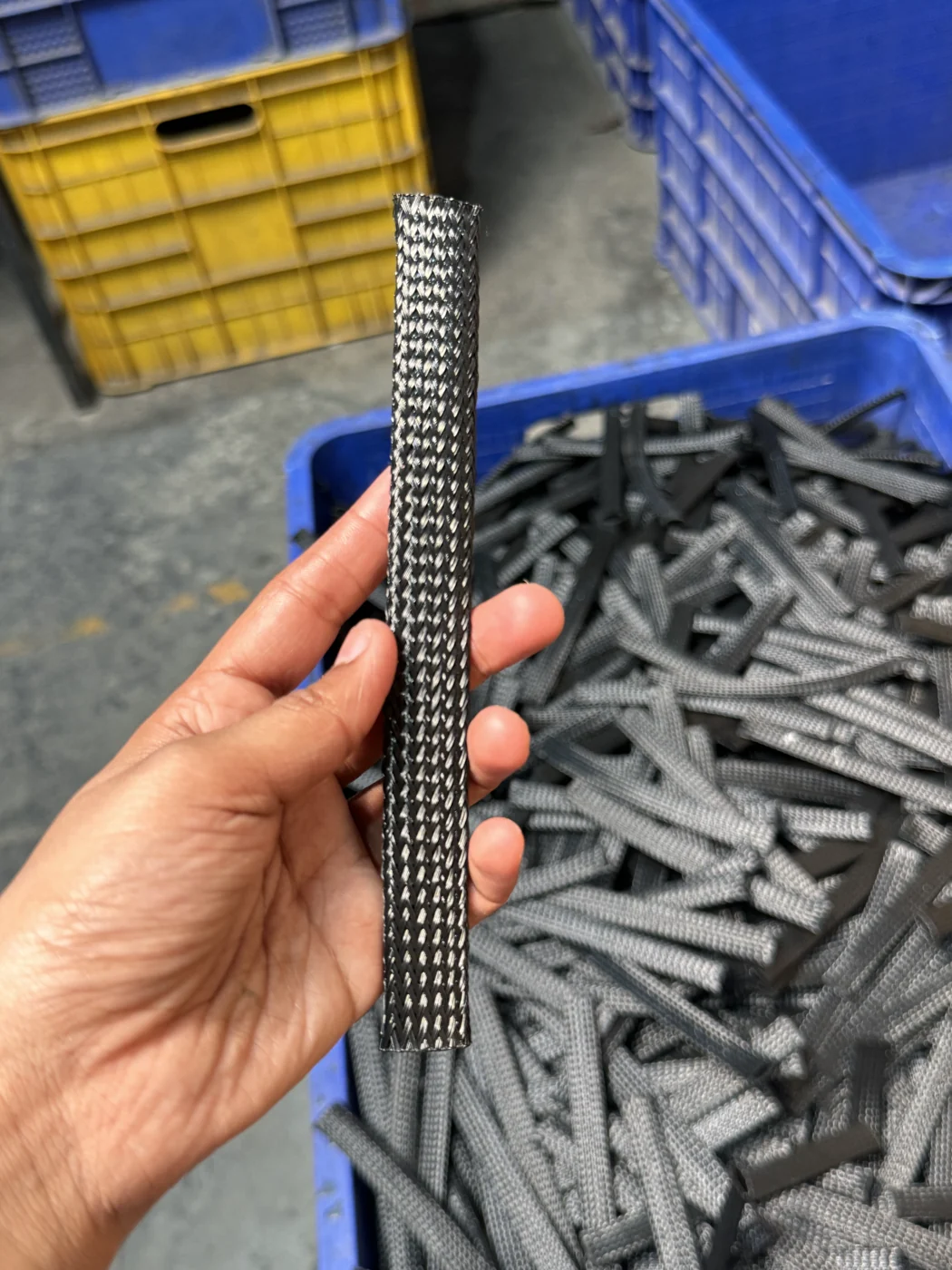
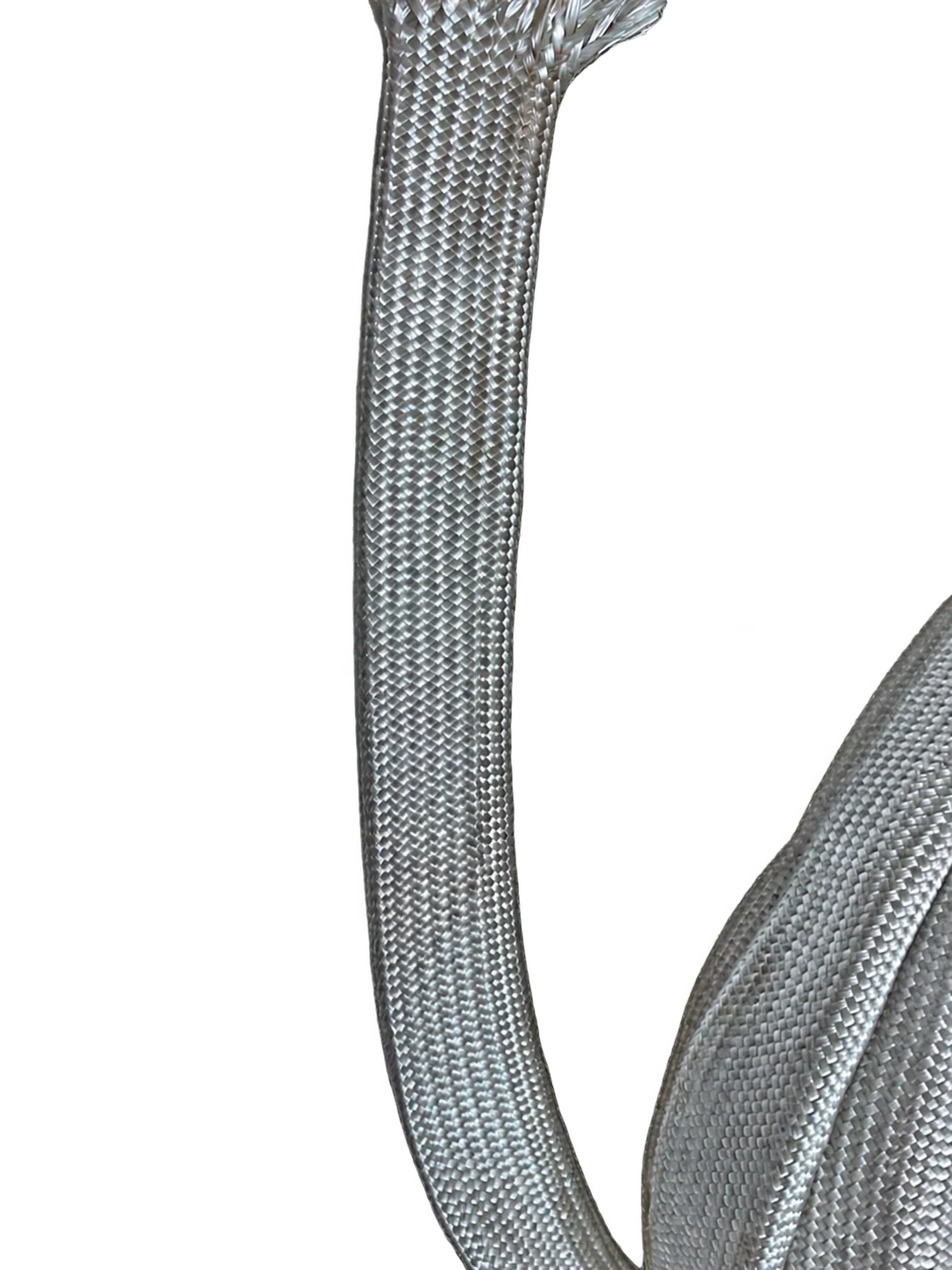
Have a specification question?
Send your application details and we'll help match the right product and configuration.
Specifying aramid for an outdoor or defence harness?
Tell us where the harness is exposed to sun, heat or cleaning chemicals through our technical enquiry form, and we will suggest where aramid fits and where another material is better. See aramid expandable sleeving sizes.