
Motor Rewinding: Using Fibreglass Sleeving on Lead-Outs, Joints and Sensor Leads
Every rewinding shop uses fibreglass sleeving, but often on habit. This guide covers which glass sleeve belongs where in a rewound motor, the job uncoated braid must never do, and how varnish changes the choice.
Walk into any motor rewinding workshop and you will find fibreglass sleeving: on lead-outs, around sensor wires, in a box under the bench next to the varnish tank. It is one of the most used and least discussed materials in the trade. Much of it is bought on habit ("white glass sleeve, 10 mm") without much thought about which kind of glass sleeve a particular job needs.
This guide is for rewinders, repair shops and maintenance teams working on induction motors, generators and transformers. It explains which fibreglass sleeve goes where in a rewound machine, the one job uncoated braid must never be given, how varnish changes things, and how to size lead-out bundles properly.
Two very different products, both called "glass sleeving"
Most confusion in rewind shops comes from treating two different products as interchangeable:
| Coated glass sleeving (silicone, acrylic or varnish coated) | Uncoated expandable glass braid (Synflex SYN-FBG, SYN-HT-FBG) | |
|---|---|---|
| What it is | Glass braid with a continuous polymer coating, close-fitting, fixed bore | Open tubular glass braid that expands to fit a range of bundle sizes |
| Main job | Electrical insulation, graded by breakdown voltage | Mechanical and thermal protection, bundling, varnish carrier |
| Temperature | Limited by the coating (silicone-coated types to IEC 60684-3-400 series are suitable up to 180 °C) | Limited by the glass: uncoated E-glass sleeving is suitable up to 350 °C (IEC 60684-3-300) |
| Typical place in a motor | Over brazed or crimped joints, on individual coil leads, over jumpers | Over lead-out bundles, sensor leads and connection clusters, at frame exits |
Thermal class: glass is never the weak link
Motor insulation is rated by thermal class under IEC 60085: Class 130 (B), 155 (F), 180 (H) and above, each defined by the maximum hot-spot temperature the insulation system can sustain. Most modern industrial motors are Class F, often run with a Class B temperature rise for extra life. The life rule of thumb that rewinders know well still holds: roughly half the insulation life for every 10 °C of extra temperature.
The class belongs to the whole system: wire enamel, slot liners, phase separators, varnish, tapes and sleeving together. In that system, inorganic glass is never the limiting component. Uncoated E-glass braid sits comfortably above Class H. The varnish, enamel and any coating are what set the ceiling. So:
- An uncoated glass braid will not downgrade a Class F or Class H rewind.
- A coated sleeve can, if its coating rating is below the motor's class. Check the coating rating, not just the word "glass".
Where uncoated glass braid earns its place in a rewound motor
1. Over the connection cluster on the end winding
After the joints are brazed and individually insulated, they are usually grouped and laced to the end winding. A length of expandable braid over the insulated cluster adds abrasion protection against the frame and rotor-side air movement. Once impregnated, the braid soaks up varnish and locks the cluster to the winding as a single solid unit.
2. Thermistor, PTC and RTD sensor leads
Embedded temperature sensors have thin, fragile leads routed through the end winding to the terminal box. A small expandable sleeve, for example SYN-FBG-003 (1–6 mm), protects them during lacing and impregnation and makes them easy to identify later.
3. The lead-out bundle along the overhang
The run from the connection point to the frame exit is where leads vibrate against laced coils and tie cords. Sleeving the bundle keeps the leads together and stops individual lead insulation from chafing.
4. The frame exit or lead hole
This is the classic abrasion point: leads passing through a cast-iron or fabricated frame opening, often with a rough edge. Here the sleeve should be continuous through the hole, with the opening properly bushed or grommeted.
5. Stop before the gland seal
This is a detail many shops get wrong. A cable gland or terminal-box seal must grip a solid jacket or grommet to seal. An open glass braid is porous, and liquids wick along it by capillary action. Running braid through a sealing gland lets water and oil travel along the sleeve into the terminal box, or into the motor. Finish the braid before the seal, or seal on the lead insulation.
6. Anti-condensation heater leads
Larger motors and generators often have space heaters fitted to the end winding to prevent condensation when idle. Their leads run hot and close to the winding, which is exactly the job covered in our heater lead sizing guide.
Varnish changes everything: dip, trickle and VPI
An open glass braid behaves very differently once it has been through impregnation.
Inside the varnish zone, braid becomes part of the winding
Uncoated braid wets out readily, so varnish is drawn into the yarns by capillary action. After curing, the braid is a rigid, resin-locked composite: excellent for holding a connection cluster or sensor lead to the end winding, and no longer flexible.
Outside the varnish zone, keep it flexible
The lead-outs need to stay flexible where they leave the frame, or they will crack at the exit after a few seasons of vibration and maintenance handling. Repair specifications from large users, such as U.S. Navy motor repair instructions and utility rewind specifications, require leads to be kept out of the varnish bath except at the connection point. That is good practice for glass sleeving too:
- Hold the lead-outs clear of the dip tank or VPI resin, or mask them.
- Remember that a sleeve wicks. Varnish creeps up an open braid well beyond the surface level. Keep the varnish line clearly below where the lead needs to bend.
- If a lead-out sleeve does pick up varnish near the frame exit, replace that section rather than leaving a rigid, crack-prone length at the hinge point.
Standard or heat-treated braid for impregnation?
Standard textile glass yarn carries a starch-oil size, typically 0.5–3 % by weight. It is designed to protect the yarn during braiding, not to bond with resins. Heat cleaning removes it, and composite and coating manufacturers clean glass precisely so that resins and coatings adhere better. So:
- Varnish-locked locations (connection clusters, sensor leads bonded to the end winding): SYN-HT-FBG heat-treated braid gives a cleaner glass surface for the varnish to wet and bond to.
- Flexible lead-outs outside the varnish zone: standard SYN-FBG is softer and more tolerant of repeated flexing.
Always check compatibility with your varnish system on a trial piece. Cure, section and inspect for wet-out before standardising.
Sizing lead-out bundles
A braided sleeve wraps the perimeter of a bundle, so the equivalent round diameter is what matters, not the caliper width. For equal leads of diameter d:
- 3 leads (direct-on-line, grouped in a triangle): equivalent ≈ 1.95 × d.
- 6 leads (star-delta, grouped 2 × 3): equivalent ≈ 2.91 × d, the same as a 1 + 6 hexagonal bundle.
- Mixed bundles (power leads plus sensor and heater leads): wrap a thread once around the bundle, measure it and divide by π.
Then choose a size where that equivalent diameter falls in the lower half of the sleeve's expansion range. In a rewind, lugs are crimped after sleeving, so lug size rarely matters.
| Job | Bundle | Equivalent diameter | Suggested size |
|---|---|---|---|
| Small DOL motor, 3 lead-outs | 3 × 4.0 mm OD | 7.8 mm | SYN-FBG-008 (5–16 mm) |
| Star-delta motor, 6 lead-outs | 6 × 7.5 mm OD | 21.8 mm | SYN-FBG-019 (14–30 mm) |
| PTC thermistor pair | 2 × 1.2 mm OD | 2.0 mm | SYN-FBG-003 (1–6 mm) |
| Connection cluster, 6 insulated joints | Measure with a thread | e.g. 30 mm | SYN-HTFS-032 (20–50 mm) |
Lead diameters are examples. Measure your own lead wire, as OD varies with conductor size, insulation type and manufacturer.
Practical tips from the bench
- Buy by spool, not by the metre. Most rewind shops use three or four sizes. Synflex spools run from 1,000 m on the 3 mm size down to 100 m on the largest. A 500 m minimum order covers months of work in common sizes.
- Cut with sharp shears and finish the ends. Glass will not hot-knife seal. Tie or tape the ends, or let the varnish lock them where the sleeve is inside the impregnation zone.
- Wear gloves when cutting. Cut ends shed short fragments that irritate skin.
- Keep spools clean and dry. A sleeve contaminated with oil or grinding dust in the workshop will not wet out properly with varnish.
- Don't kink it. Curves are fine; sharp folds break filaments. We explain why in our article on the physics of fibreglass braid.
Beyond motors: transformers and generators
The same principles apply to transformer lead-outs and tapping leads, welding transformers, chokes and generator stators. Insulate first with the material your insulation system specifies. Use uncoated braid for mechanical protection and bundling. Decide deliberately which sections should be varnish-locked and which must stay flexible.
Frequently asked questions
Can uncoated fibreglass sleeving be used to insulate motor joints?
No. An open glass braid is not electrical insulation. Insulate brazed or crimped joints with coated sleeving, insulating tape or mica tape as specified by your insulation system, then use expandable braid over the top if mechanical protection is needed.
Will fibreglass sleeving reduce a motor's insulation class?
Uncoated glass braid will not. Glass is rated far above Class F and H. A coated sleeve can, if its coating is rated below the motor's class, so check the coating rating.
Should sleeving on motor lead-outs go through the varnish?
Only at the connection point. Lead-outs should stay flexible where they leave the frame, so keep them out of the varnish bath. Remember that open braid wicks varnish above the surface level.
Is heat-treated or standard fibreglass sleeving better for rewinding?
Heat-treated braid has its textile size removed, which gives varnish a cleaner glass surface to bond to. That makes it the better choice for varnish-locked locations. Standard braid is softer and better for flexible lead-outs outside the varnish zone.
The bottom line
In a rewound motor, uncoated glass braid is a mechanical and thermal protector, a bundler and a varnish carrier. It is never the electrical insulation. Insulate joints first, use heat-treated braid where varnish should lock it to the winding, keep standard braid flexible on lead-outs, stop it before any sealing gland, and size it from the bundle's perimeter.
References
- IEC 60085, Electrical insulation: Thermal evaluation and designation.
- IEC 60684-3-300 (uncoated glass textile sleeving) and IEC 60684-3-400 to 402 (silicone elastomer coated glass textile sleeving).
- EASA AR100, Recommended Practice for the Repair of Rotating Electrical Apparatus.
- U.S. Navy NAVSEA Standard Item 009-113 and utility motor repair specifications on lead handling during impregnation.
Where this shows up in the catalogue
Fibreglass Expandable Sleeve
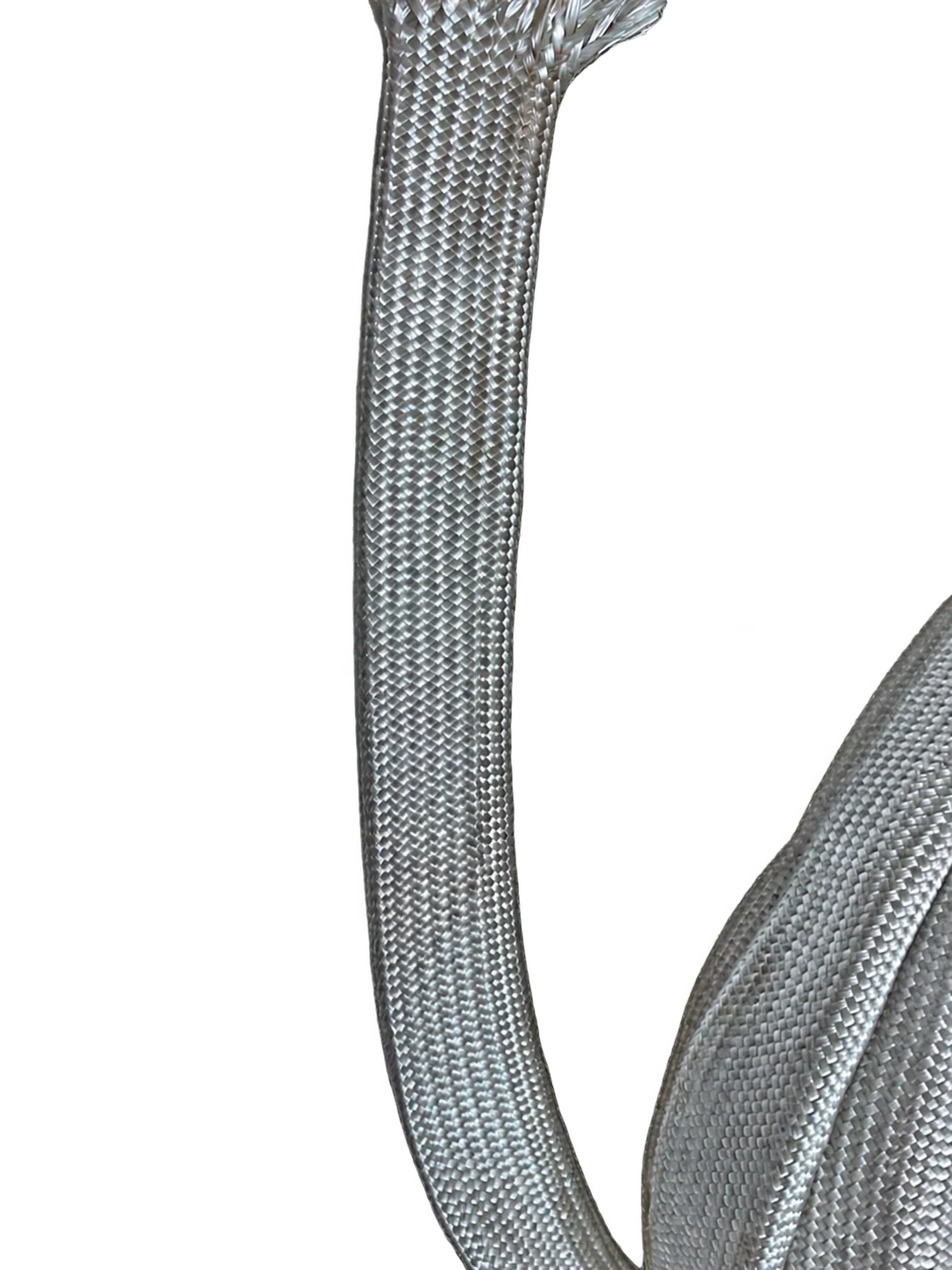
Standard SYN-FBG for flexible lead-outs, 3–76 mm
Heat-Treated Fibreglass Sleeve
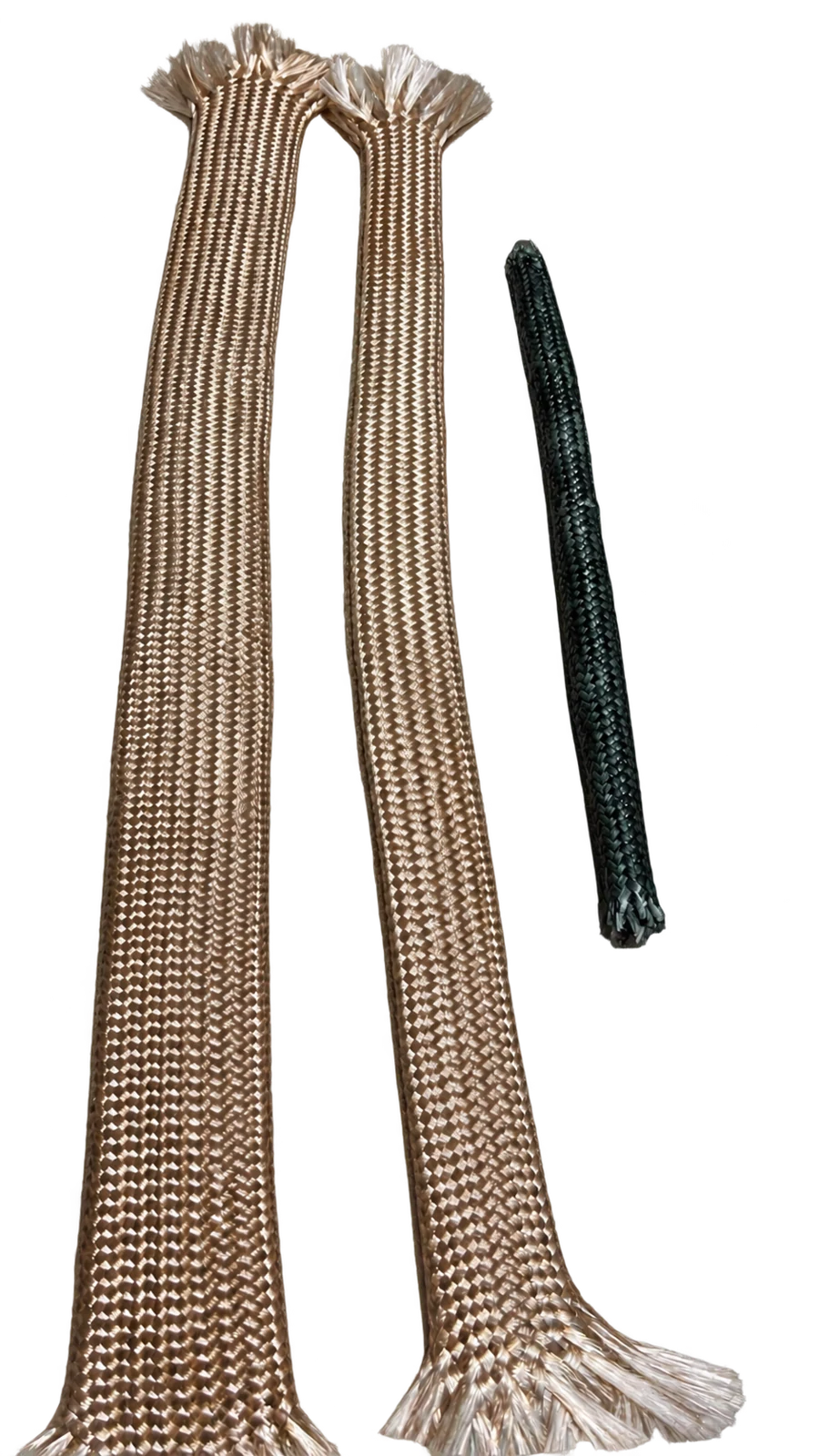
SYN-HT-FBG for varnish-locked clusters and sensor leads

Self-Closing Wrap
Where leads cannot be disconnected to thread a sleeve
Braided Sleeving Overview
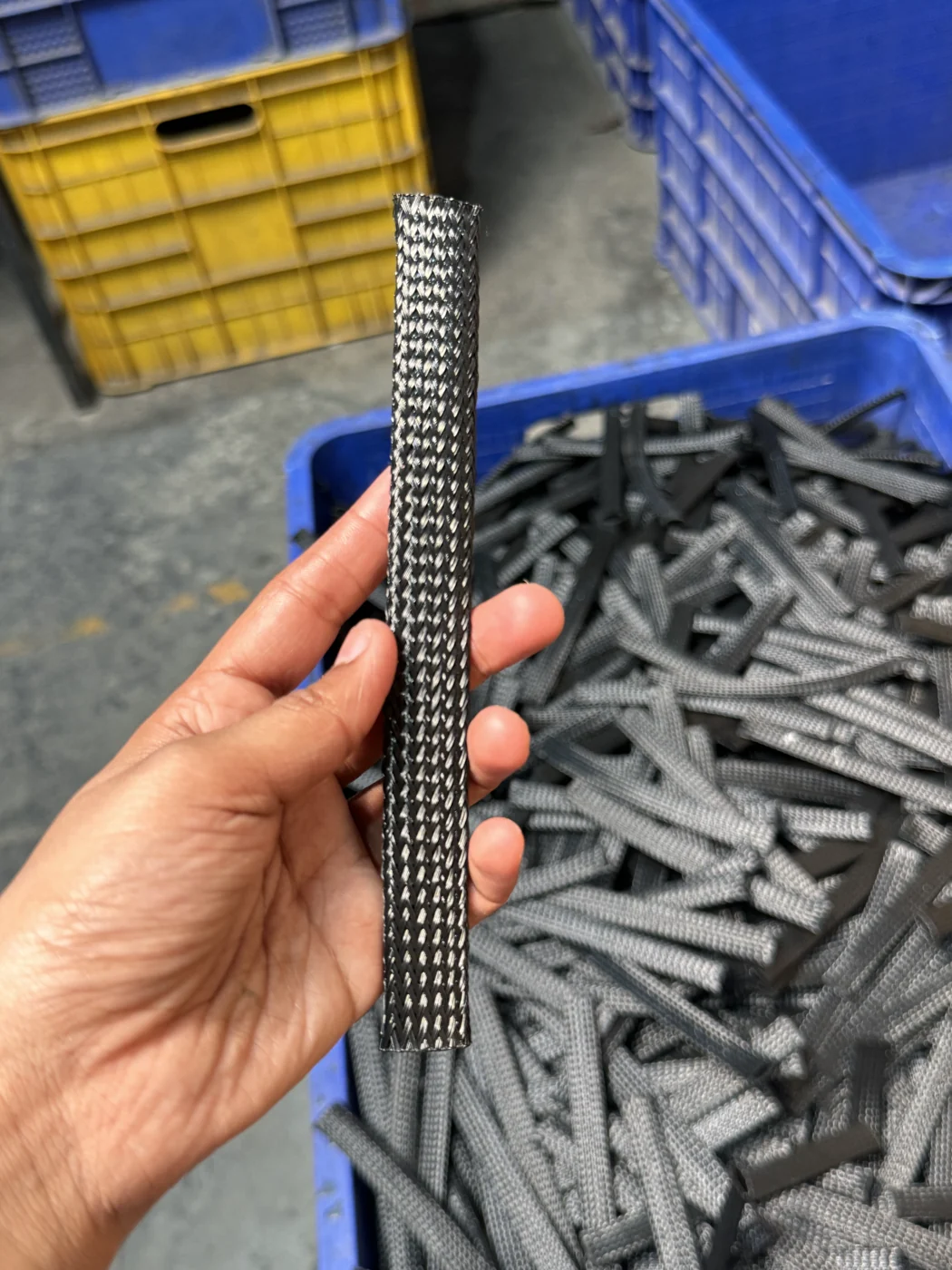
Compare PET, nylon, glass and aramid constructions
Have a specification question?
Send your application details and we'll help match the right product and configuration.
Stocking glass sleeving for a rewind shop?
Tell us the motor sizes you rewind most and we will suggest the three or four sleeve sizes that cover them. Use our technical enquiry form or see fibreglass expandable sleeving sizes.