
Cable Damage in Robot Cells and Assembly Lines: Where a Rigid Repair Wrap Belongs, and Where It Doesn't
In a body shop or assembly line, cables fail in the same few places every time. A rigid repair wrap is the right fix for some of them and exactly the wrong one for others. Here is how to tell the difference.
Walk a body shop or a final assembly line with the maintenance team and they can point out the cable damage spots from memory. The same floor crossing gets run over every shift. The same cable entry at a robot base gets kicked by the same fixture. The same guard edge chews through the same jacket every few months. Cable damage in a car plant is rarely random. It is repeatable, and that makes it predictable.
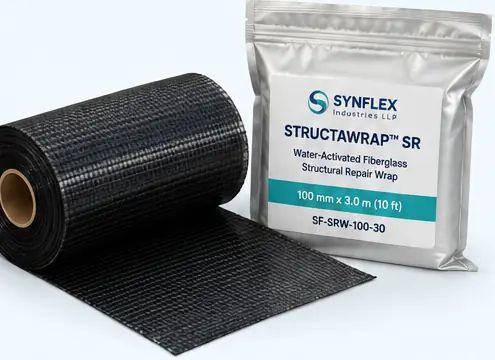
A water-activated fibreglass repair wrap such as STRUCTAWRAP SR is a fast way to put a damaged section back into safe service. But it cures into a rigid shell, and that single fact decides where it belongs. This article maps the usual damage points in automated lines and says, for each one, whether a wrap is the right fix.
The one rule: rigid armour goes on fixed sections
Before the map, the rule that sits behind every recommendation in it.
A cable that keeps bending spreads that bending along its length. Put a rigid shell over part of it and the shell cannot bend, so all the movement is pushed to the two ends of the shell. The cable now flexes sharply at exactly two points, every cycle, and it fails there much sooner than it would have without the repair.
So the test for every damage point is simple: does this section of cable move in normal operation? If it is fixed or only moves when someone knocks it, a rigid wrap is a good repair. If it flexes with the machine, it needs a flexible fix.

The damage map
These are the places cables most often get damaged in automotive robot cells, body shops, paint shops and assembly lines, with the right response for each.
| Damage point | Typical damage | Does it move? | Repair wrap? | Better long-term fix |
|---|---|---|---|---|
| Floor crossings | Crushed by trolleys, AGVs, forklifts and dropped parts | No | Yes | Floor cable protector or overhead route |
| Robot base cable entry | Kicked, knocked, pinched by fixtures | No | Yes | Conduit with fitting into the base |
| Guard and frame edges | Cut or abraded where the cable rests on an edge | Barely | Yes | Edge protection and re-routing |
| Fence and panel penetrations | Chafed in an unprotected hole | No | Yes | Grommet or conduit fitting |
| Cable tray exits | Bent over the tray edge and worn | No | Yes | Tray exit fitting, larger bend radius |
| Robot upper arm and wrist | Abrasion and fatigue in the dress pack | Yes | No | Dress pack with protective sleeve |
| Cable carriers and drag chains | Wear inside the chain | Yes | No | Correct chain size and fill, replace the cable |
| Weld spatter zones | Burns and pitting from hot spatter | Varies | No | Heat-treated fibreglass sleeve or spatter covers |
Where the wrap earns its place
Floor crossings. A cable on the floor of an assembly hall is struck many times a day. Crush and impact damage the jacket long before it reaches the conductors. Once the jacket is broken, coolant, oil and washdown water get in. A repair wrap rebuilds a hard, sealed shell over the damaged length and spreads the next impact across it. In laboratory testing STRUCTAWRAP SR reached an impact toughness of 38 kJ/m² and a compressive strength of 321 N, which is what makes it useful here. The long-term fix is still to stop the cable being run over.
Robot base entries. Where the main cable enters the robot base it is usually fixed and clamped, but it sits at ankle height in a busy cell. It gets kicked, caught by fixture changes and pinched by moving trolleys. That is fixed-section damage, and a wrap repair suits it well.

Edges, penetrations and tray exits. Here the cable sits still, but under load against something hard. Vibration from presses, conveyors and robots makes it rub a little, millions of times. The jacket wears through at one spot. A wrap rebuilds a hard layer over that spot, but on its own it only moves the wear into the wrap. Always fix the cause too: radius the edge, fit a grommet or a conduit fitting, or move the cable.
Where it does not belong
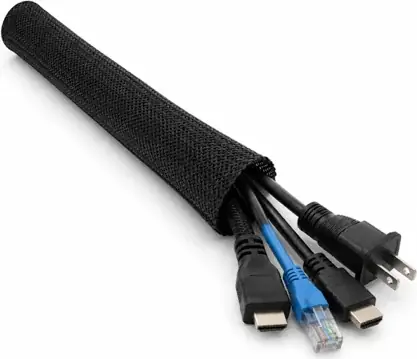
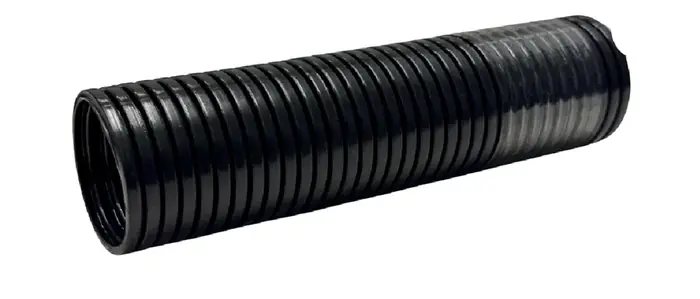
Robot dress packs. The cables along a robot's upper arm and wrist bend and twist with every motion. They wear inside the dress pack sleeve and fatigue at the clamps. Putting a rigid shell on them pushes all that movement to the ends of the shell. Damaged dress pack cables need replacing, and the dress pack needs a protective sleeve such as ABRO protective tube or a correctly specified conduit over the moving length.
Cable carriers. A cable that has worn inside a drag chain has usually done so because the chain is too full, the bend radius is too tight or the cable is the wrong type. Wrapping it makes it stiffer and thicker, which makes all three problems worse.
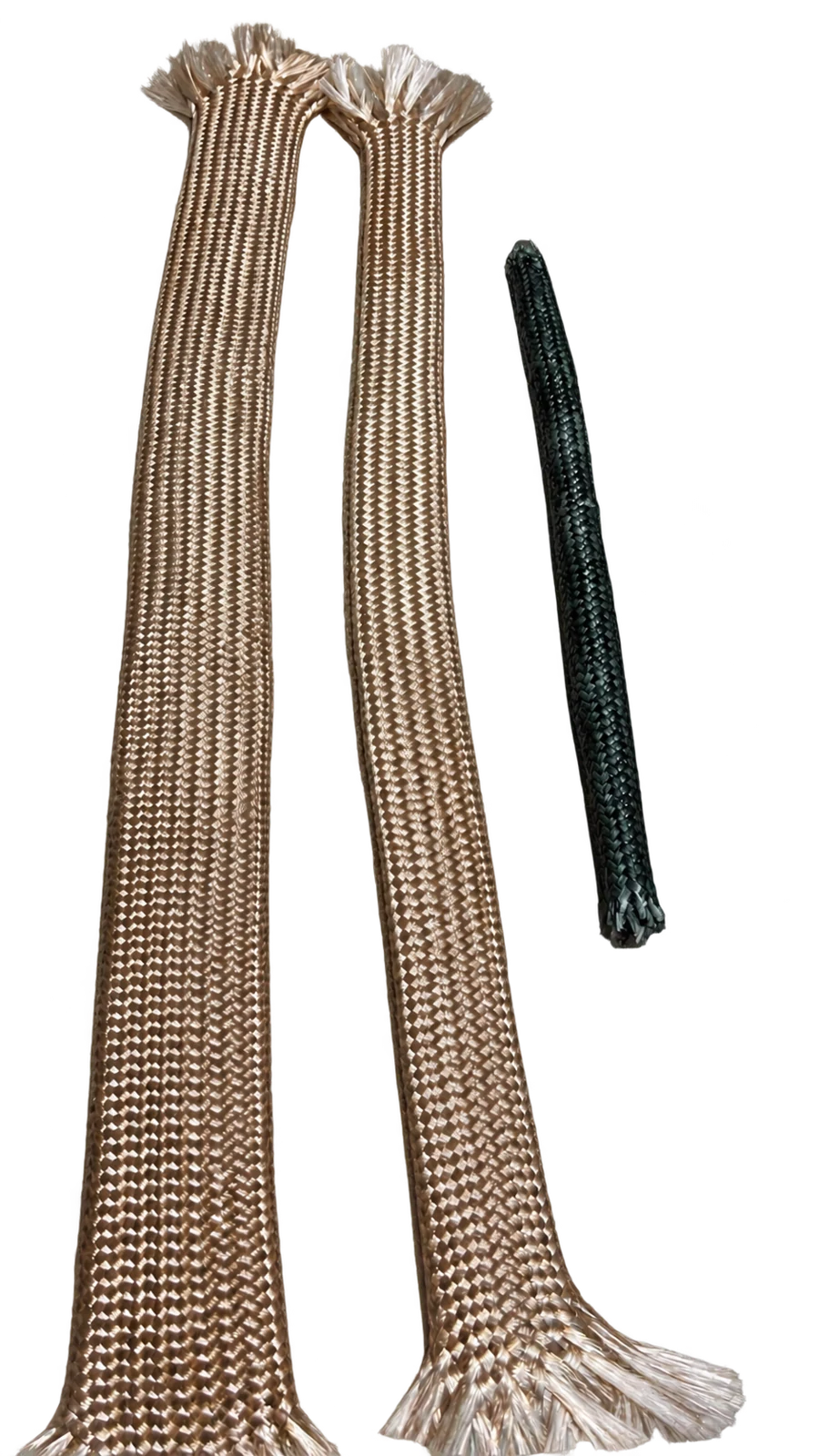
Weld spatter. Molten spatter is far hotter than any polymer can tolerate. STRUCTAWRAP SR is not rated or tested as spatter protection. In body shop weld zones, use protection designed for heat, such as heat-treated fibreglass sleeving or purpose-made spatter covers.
Repair now, fix the cause at the next shutdown
On a running line, the value of a wrap is time. The repair sets in about six minutes and can be handled in about thirty, with no heat gun, no power and no bulky splice enclosure. That turns an unplanned stoppage into a short intervention, and moves the real fix to a planned window.
A good maintenance routine looks like this:
- Check the insulation first. A wrap restores mechanical protection, not electrical insulation. If the conductor insulation is damaged, the cable must be properly repaired or replaced. Follow your plant's electrical safety procedure and isolate the circuit before working on it.
- Wrap the fixed section. Clean it, then wrap several overlapping layers extending at least 50 mm past the damage on each side.
- Tag and log it. Mark the repair and record the location. A wrap repair is a known point in the plant, not a forgotten one.
- Remove the cause. At the next planned stop, fit the edge protection, grommet, floor protector or new route that stops the damage recurring.
- Review the log. If the same point needs a second repair, the cause has not been fixed.

Stock it where the damage happens
A repair wrap only saves time if it is at hand. Plants that use them well keep a few rolls in each maintenance area, sized to the cables they actually run. Our rolls are 100 mm wide in three lengths:
| Product code | Length | Typical use in a plant |
|---|---|---|
| SF-SRW-100-15 | 1.5 m | Control and sensor cables, small local damage |
| SF-SRW-100-30 | 3.0 m | Machine supply cables, robot base entries |
| SF-SRW-100-45 | 4.6 m | Large power cables, long floor-crossing damage, joints |
Store them sealed, dry and between 15 and 30 °C. Unopened, they keep for two years. For how the material cures and what its test values mean, see how a water-activated repair wrap turns rigid.
Have a specification question?
Send your application details and we'll help match the right product and configuration.
Mapping cable damage across a line?
Send us photos of the damage points and the cable sizes through our technical enquiry form, and we will suggest which to wrap, which to sleeve and which to re-route. See STRUCTAWRAP SR roll sizes.