
Silicone-Coated Fibreglass Fire Sleeve
Braided fibreglass with a thick silicone rubber coating. It protects hydraulic hoses, cables and pipes from radiant heat, molten metal splash and brief flame, and keeps working from −60 to +260 °C.
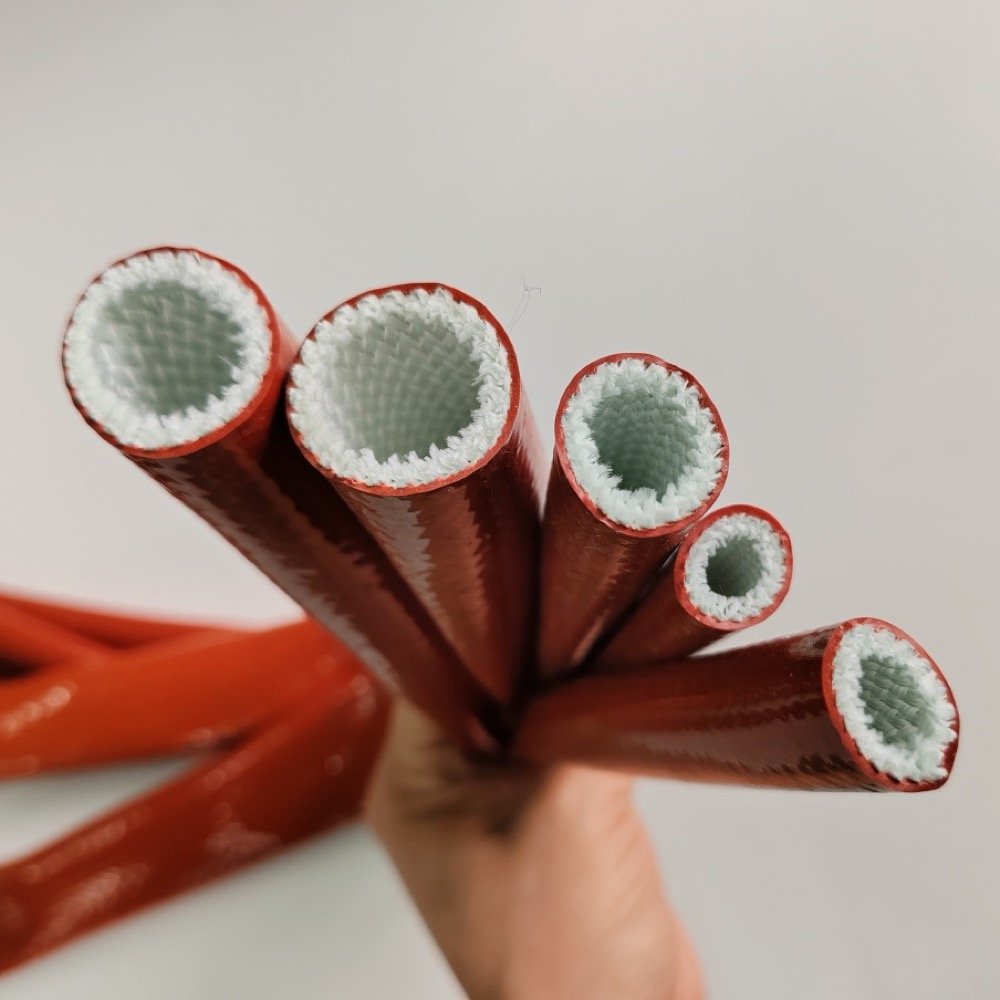
Fibreglass for the heat. Silicone for everything else.
The braided E-glass tube does not melt or burn and keeps protecting far above the temperature at which polymer sleeves fail. The silicone rubber coating closes the braid, so oil, hydraulic fluid, water and molten splash cannot soak in, and the sleeve stays flexible down to −60 °C.
Values are typical. Request the test evidence for your size and colour before specifying.
| Property | Typical value |
|---|---|
| Construction | Braided E-glass fibreglass tube with silicone rubber coating |
| Ordering series | SYN-SCF |
| Inside diameter | 8–102 mm (18 sizes) |
| Wall thickness | 2.0–4.6 mm nominal, by size |
| Continuous working temperature | −60 to +260 °C |
| Short-term exposure | +800 °C for 30 min · +1100 °C for 15 min · +1500 °C for 1 min |
| Molten splash | Sheds molten metal splash up to about 1200 °C |
| Flammability | Self-extinguishing (FMVSS 302) |
| Railway fire standard | EN 45545-2, requirement sets R22 and R23 |
| Halogens | Halogen free |
| Low-temperature flexibility | Excellent |
| UV resistance | Good |
| Hydrocarbons (oils, fuels, hydraulic fluid) | Resistant; slight swelling |
| Colours | Iron-oxide red (standard), black; other colours on request |
| Compliance | RoHS |
| Supply | Continuous coils; cut pieces on request |
Thick coating, tight braid.

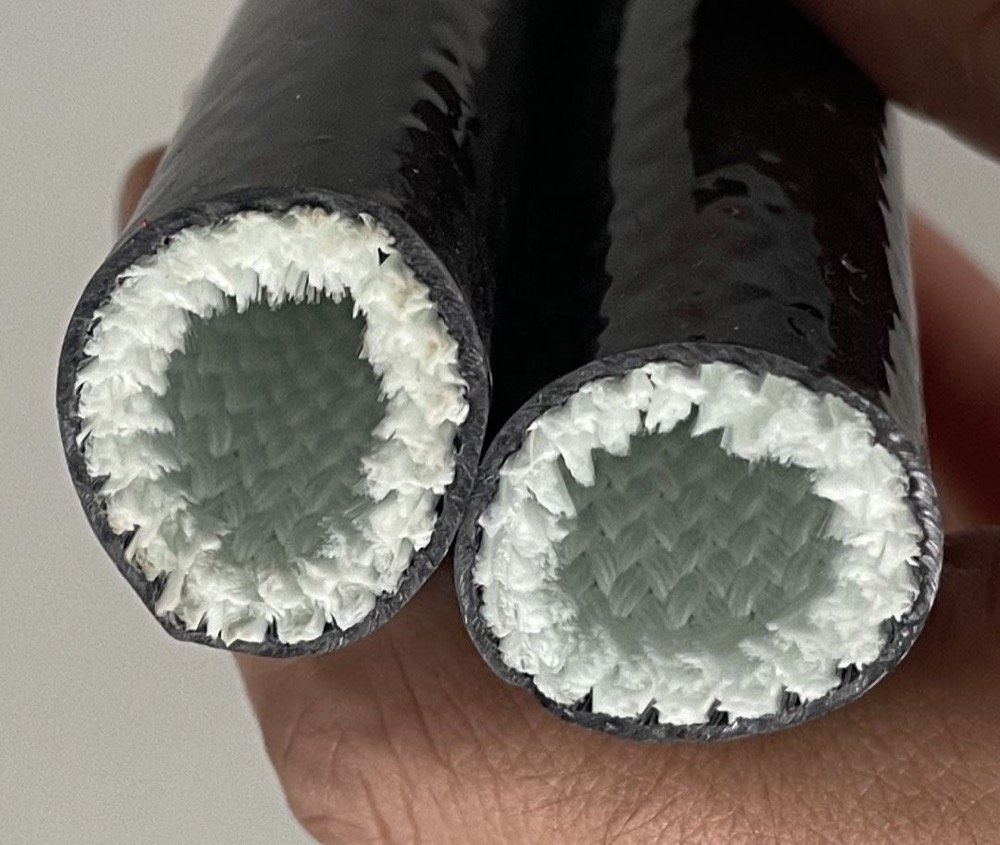
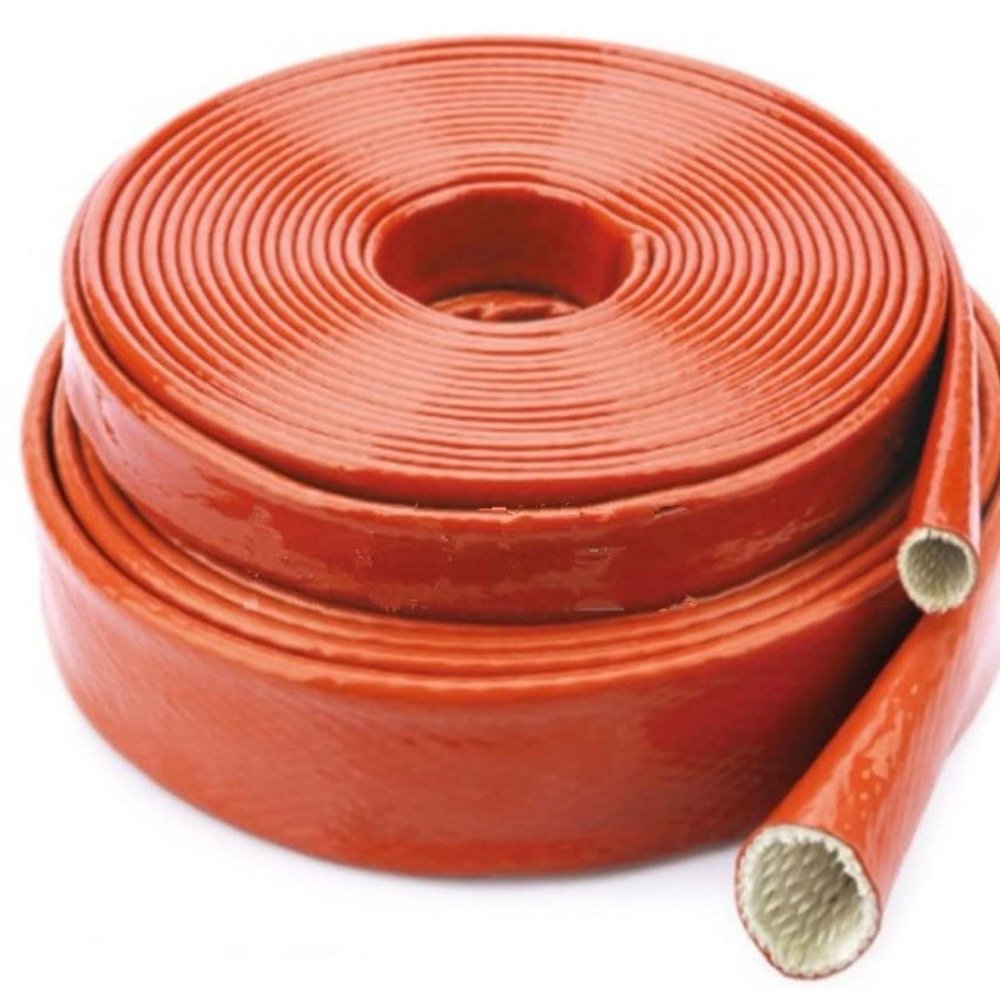
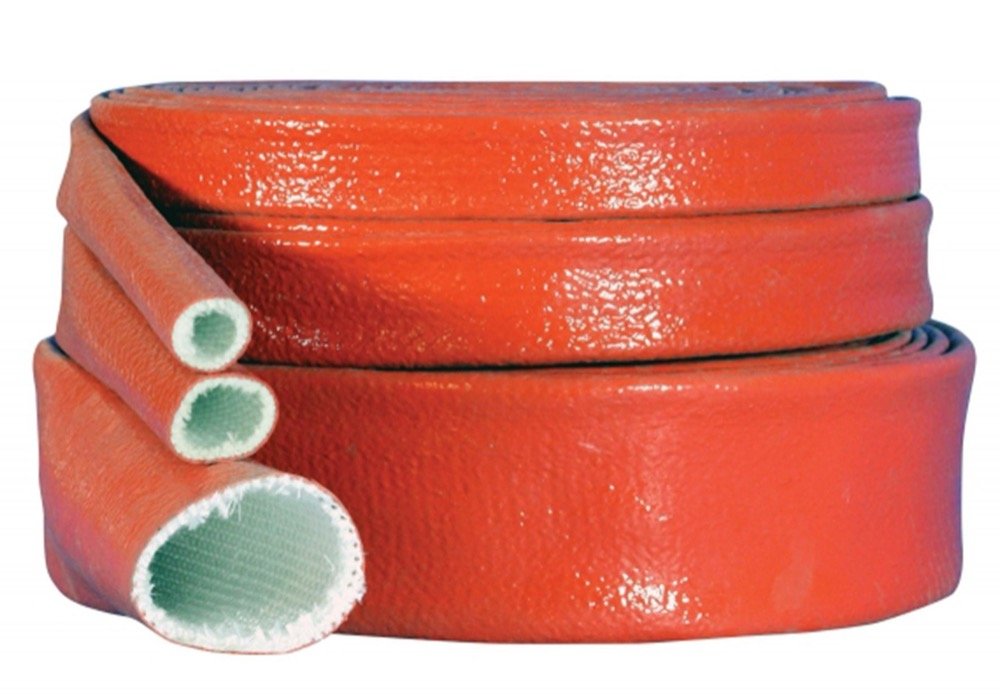
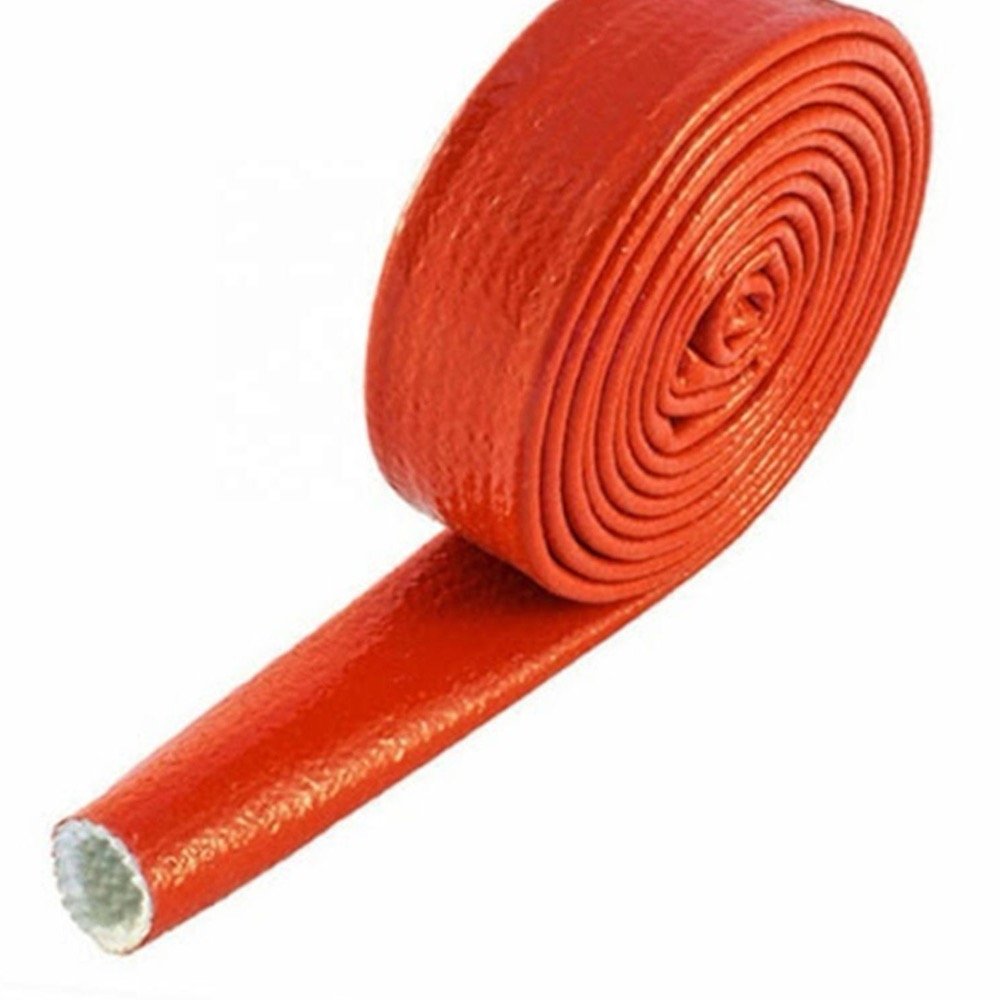
18 sizes, 8 to 102 mm.
Choose the inside diameter that clears the largest hose fitting or connector the sleeve must pass over. The coated sleeve does not expand like an open braid, so allow a little clearance. Spool lengths and cut pieces are confirmed with the quotation.
| Reference | Inside diameter (mm) | Nominal wall (mm) | Enquiry |
|---|---|---|---|
| SYN-SCFS-008 | 8 | 2.0 | Request quote |
| SYN-SCFS-010 | 10 | 2.0 | Request quote |
| SYN-SCFS-013 | 13 | 2.2 | Request quote |
| SYN-SCFS-016 | 16 | 2.2 | Request quote |
| SYN-SCFS-019 | 19 | 2.5 | Request quote |
| SYN-SCFS-022 | 22 | 2.6 | Request quote |
| SYN-SCFS-025 | 25 | 2.6 | Request quote |
| SYN-SCFS-032 | 32 | 3.0 | Request quote |
| SYN-SCFS-038 | 38 | 3.5 | Request quote |
| SYN-SCFS-045 | 45 | 3.5 | Request quote |
| SYN-SCFS-051 | 51 | 3.6 | Request quote |
| SYN-SCFS-057 | 57 | 3.8 | Request quote |
| SYN-SCFS-064 | 64 | 4.0 | Request quote |
| SYN-SCFS-070 | 70 | 4.0 | Request quote |
| SYN-SCFS-076 | 76 | 4.0 | Request quote |
| SYN-SCFS-080 | 80 | 4.3 | Request quote |
| SYN-SCFS-089 | 89 | 4.5 | Request quote |
| SYN-SCFS-102 | 102 | 4.6 | Request quote |
Wall thickness is nominal. Special spool lengths and cut pieces are available on request.
Where heat, splash and fluids meet.
Use the coated fire sleeve where a plain fibreglass braid would soak up oil or let molten splash through.
- Steel plants, foundries and forge shops: hydraulic hoses and cables near ladles, furnaces, casting machines and hot billets, where molten splash and radiant heat are part of the job.
- Glass and ceramics: services running past furnaces, forehearths and annealing lehrs.
- Automotive plants: robot cables and hoses near weld cells and spatter; die-casting machines; test cells near exhausts and turbochargers.
- Hydraulic and lubrication lines: a split hose inside a fire sleeve sprays into the sleeve, not onto a hot surface, and the sleeve keeps the hose cooler in normal running.
- Petrochemical, power and shipbuilding: instrument and control cables, fuel and oil lines near hot equipment.
- Railway rolling stock: hoses and cable bundles near brakes and traction equipment, where EN 45545-2 fire performance is required.
Protecting cables in a body-shop weld zone? See where cables get damaged in robot cells. For dry, open-braid duty, compare heat-treated fibreglass sleeving.
See the sleeve up close.
Coils in red, black, grey and blue; the silicone coating; and the fibreglass braid inside. 41 seconds.
Fit it before the last connection.
- Measure the largest fitting, then choose the next inside diameter up.
- Cut the sleeve about 25 mm longer than the run to be protected, using a sharp knife or shears.
- Slide it over the hose or cable before fitting the last connector.
- Seal each end with a silicone end clamp, stainless band clamp or high-temperature tape, so oil and splash cannot enter the braid.
- Inspect at each shutdown. A sleeve whose surface has turned white and powdery after heavy exposure has done its job; replace it.
Start with your size.
Select a size, then tell us the quantity, colour and where it is going. Our team will confirm the ordering code, spool length and delivery.
Minimum order and delivery are confirmed with your quotation.
Before you specify.
What is a silicone-coated fibreglass fire sleeve?
A braided fibreglass tube coated with a thick layer of silicone rubber. The fibreglass carries the heat resistance; the silicone seals the braid against oil, water and molten splash and keeps it flexible. It is slid over a hose, cable or pipe to protect it from heat and flame.
What temperature can it withstand?
−60 to +260 °C continuously. For short exposures it is rated to +800 °C for 30 minutes, +1100 °C for 15 minutes and +1500 °C for 1 minute, and it sheds molten metal splash up to about 1200 °C. Above 260 °C the silicone surface gradually turns to a white silica ash while the fibreglass keeps protecting; replace a sleeve that has been through a heavy exposure.
How is it different from heat-treated fibreglass sleeving?
Heat-treated fibreglass braid is an open, uncoated braid for dry, high radiant-heat duty. The silicone coating closes the braid, so the fire sleeve also resists oil, hydraulic fluid, water and molten splash, and is easier to keep clean. Choose the coated sleeve where splash or fluids are present.
Is it electrical insulation?
It adds a protective layer and is suitable over cables rated up to 1 kV, but it is not a replacement for the cable's own insulation. Use it over insulated cables, never over bare conductors.
How do I choose the size?
Measure the largest outside diameter the sleeve must pass over, including hose fittings or connectors, and choose the next inside diameter up. The sleeve does not expand like an open braid, so allow a little clearance for fitting.
How do I cut and finish the ends?
Cut with a sharp knife or shears. To keep oil and splash out of the braid and stop it fraying, finish each end with a silicone end clamp, a stainless band clamp or a high-temperature tape.